Jurisdictional Shifts Drive Creation of Unique Craps Variants
Written by Bianca Jenkins · Jul 26, 2026
Jurisdictional Shifts Drive Creation of Unique Craps Variants
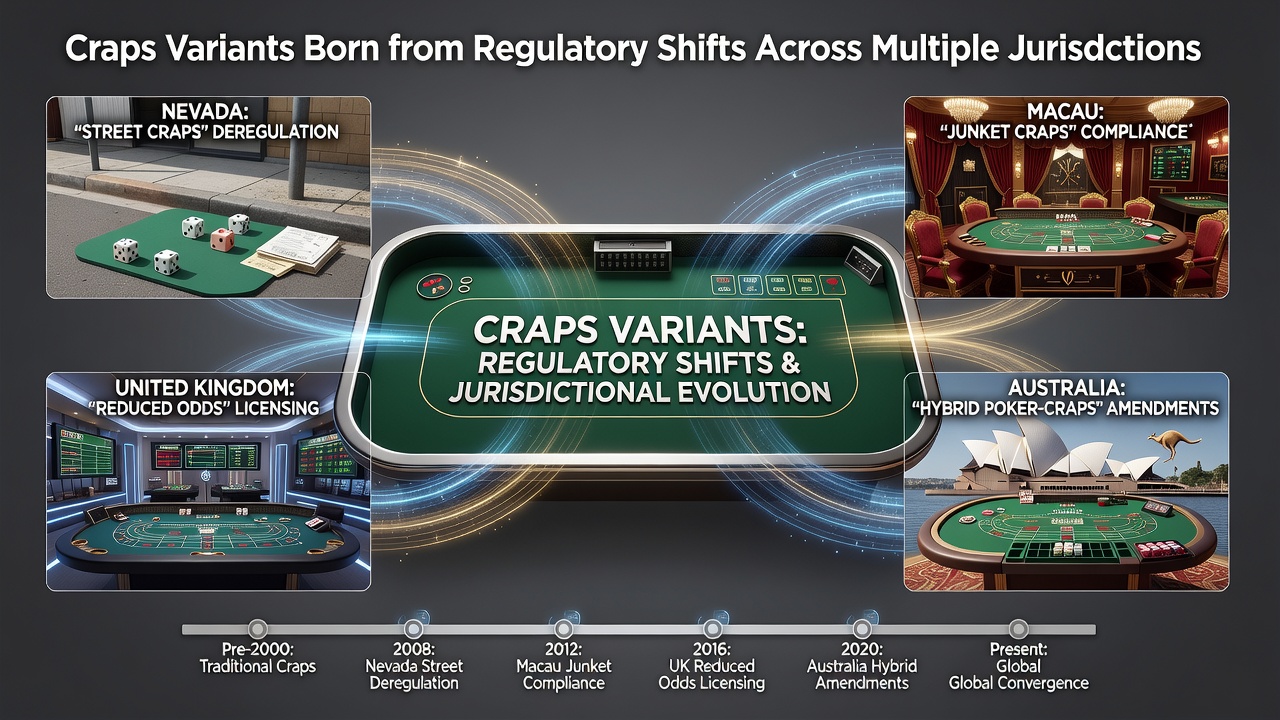
Regulatory adjustments in multiple regions have prompted operators to develop modified craps formats that comply with local statutes while preserving core gameplay elements, and these adaptations continue to expand as licensing bodies refine their oversight frameworks.
North American Regulatory Influences on Table Configurations
Changes in state and provincial rules have led to distinct craps iterations that address dice-handling requirements and payout structures, with data from the Nevada Gaming Control Board showing how land-based venues adjusted side bet options after 2024 updates to internal control standards. Observers note that facilities in Atlantic City introduced electronic dice verification systems following New Jersey Division of Gaming Enforcement directives that took effect in early 2025, resulting in a variant where players roll virtual dice through certified terminals while traditional layout betting remains intact. In Ontario, the Alcohol and Gaming Commission of Ontario implemented player protection measures that encouraged casinos to offer a streamlined craps version limiting proposition bets to reduce session volatility, and figures reveal this format gained traction among operators seeking renewed approvals.
Electronic Adaptations in Regulated Markets
Operators responded to online licensing conditions by creating RNG-based craps models that replicate physical outcomes through audited algorithms, and these versions emerged prominently after several jurisdictions updated their remote gambling codes. Canadian provinces such as British Columbia saw providers launch hybrid tables combining live dealer oversight with automated dice simulation to meet technical standards set by the Gaming Policy and Enforcement Branch, whereas Australian states enforced similar digital verification protocols that produced a regional variant featuring capped odds bets aligned with harm minimization guidelines.
European and Asian Framework Adjustments
Across the European Union, member states revised their gambling directives in ways that influenced craps offerings, with Malta's Gaming Authority requiring transparent random number certification that spurred the development of a simplified come-out roll mechanic in compliant platforms. Data indicates that operators incorporated multi-jurisdictional licensing bundles, allowing variants where certain field bets carry adjusted house edges to satisfy cross-border reporting obligations. In Asian markets, Singapore's Casino Regulatory Authority enforced strict table minimums and camera surveillance rules that prompted integrated resorts to introduce a controlled dice variant with pre-approved betting sequences, while Macau's regulatory updates around 2025 encouraged similar modifications to accommodate high-volume play under revised concession terms.
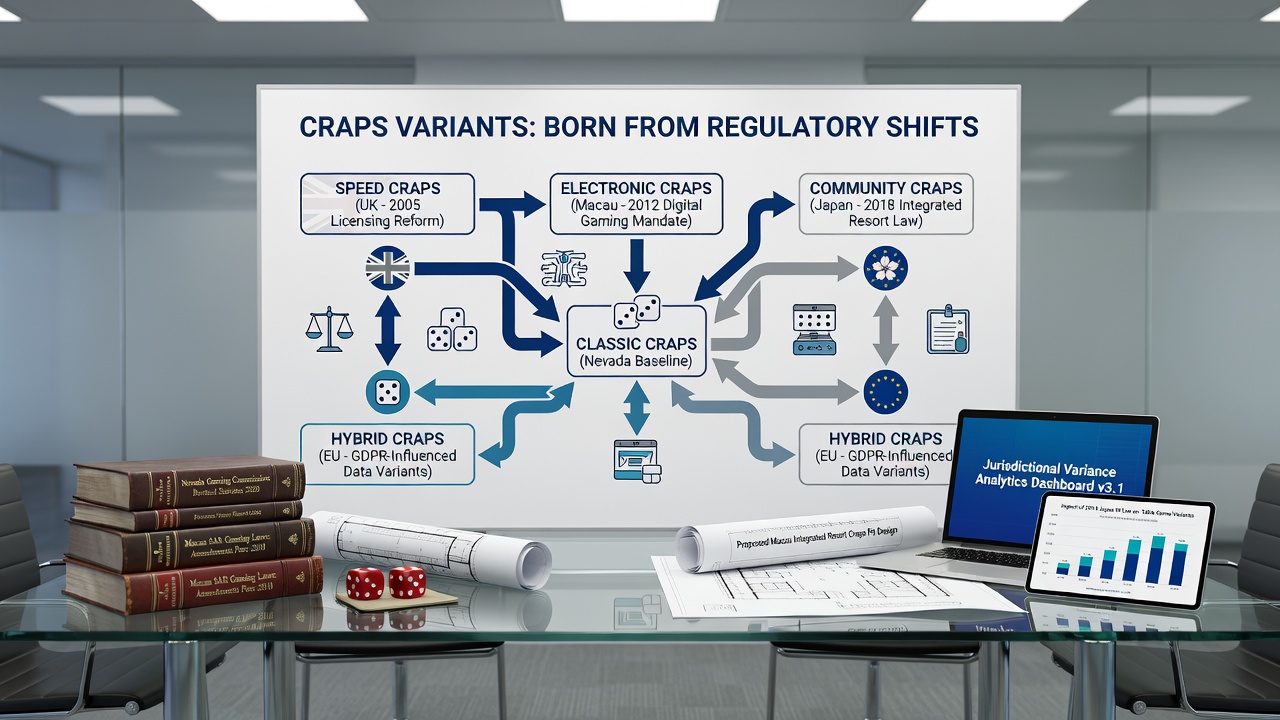
Research from the International Gaming Institute at the University of Nevada highlights how these regional constraints fostered incremental innovations, such as segmented payout tables that align with local tax calculations and audit trails. Those who've examined compliance records find that jurisdictions with phased rollout schedules, including updates planned for July 2026 in select Canadian territories, continue to test new craps iterations that balance player engagement against mandated responsible gaming features.
Online Platform Responses to Cross-Border Rules
Multi-state and international operators adapted their craps products after regulatory bodies coordinated on shared technical standards, leading to variants that incorporate geo-fencing and real-time reporting modules. According to reports from the Australian Communications and Media Authority, platforms serving regulated markets introduced craps formats with embedded session timers and bet throttling mechanisms that originated from consumer protection mandates. These systems allow seamless transitions between live and automated play modes while maintaining compliance across different licensing regimes.
Future Outlook Based on Ongoing Reforms
Stakeholders monitor legislative proposals that could further differentiate craps variants, particularly as more regions finalize digital gambling frameworks scheduled for implementation in mid-2026. Evidence from industry association surveys shows that operators investing in modular game engines can quickly deploy jurisdiction-specific rule sets, such as altered point establishment sequences or restricted hardway combinations, without overhauling entire platforms. This flexibility stems directly from regulatory demands for adaptable compliance tools rather than uniform game templates.
Conclusion
Regulatory shifts across North America, Europe, Asia, and Australia have directly produced multiple craps variants tailored to local statutes, with electronic verification, bet restrictions, and payout adjustments serving as common responses to oversight requirements. These developments reflect ongoing coordination between licensing authorities and operators, and continued refinements through 2026 are expected to generate additional iterations that address evolving compliance priorities while supporting established gameplay foundations.