Riverboat-Era Craps Customs Continue to Guide Bonus Strategies in Digital Flash Games and High-Stakes Choices
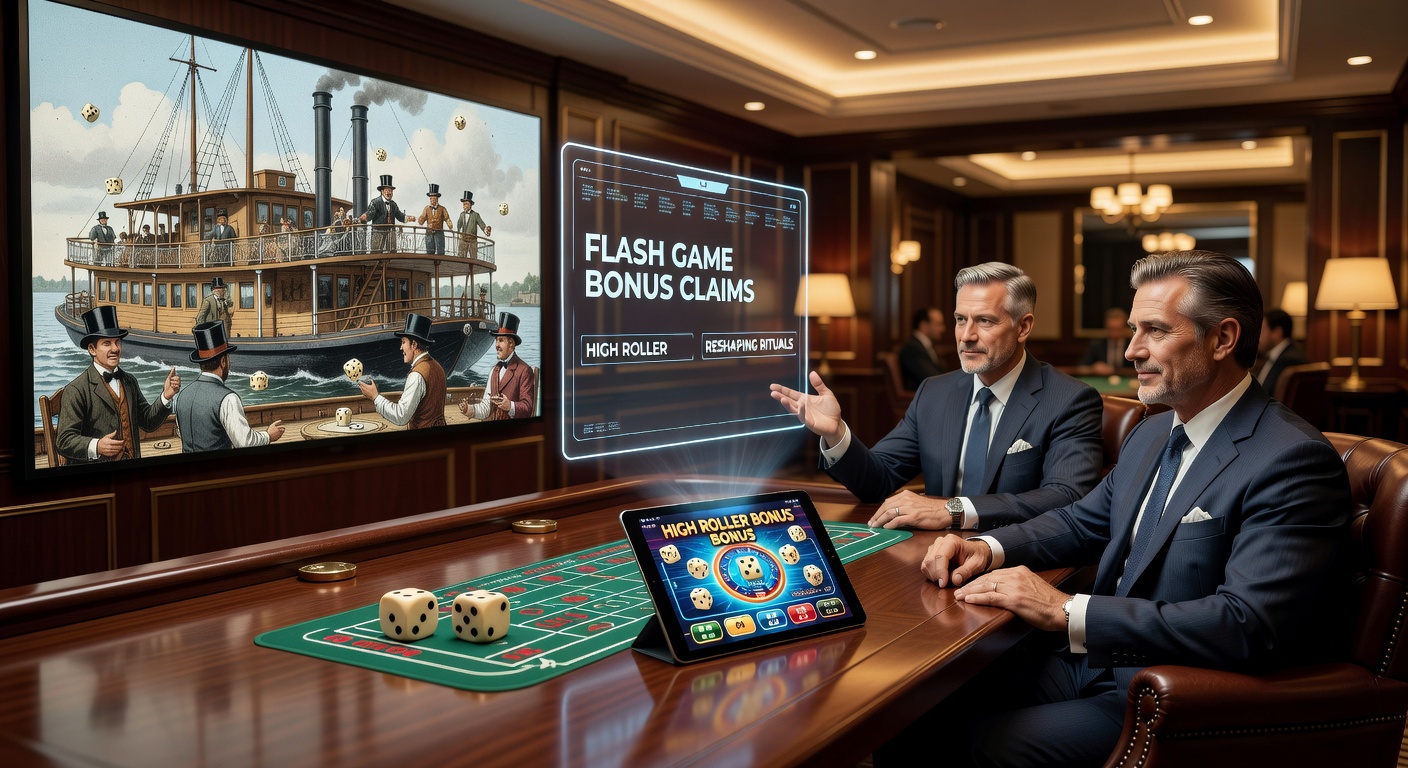
Early American riverboat gamblers developed specific rituals around craps tables during the 19th century, and those practices now appear in the structure of flash game bonus claims along with high roller decision trees used by modern operators. Riverboat crews enforced rules that required players to handle dice in particular sequences before rolls, and such patterns surface today when digital platforms require sequential actions to unlock layered bonuses in flash-based craps variants.
Historical Foundations on Mississippi Riverboats
Steamboat operators along the Mississippi between the 1830s and 1890s hosted floating gaming salons where craps evolved from earlier hazard games, and crews documented that participants often tapped the table three times before a come-out roll while blowing on dice to signal intent. These actions created consistent rhythms that dealers used to manage payout disputes, and records from port authorities in New Orleans show how such gestures reduced arguments over whether a roll qualified for bonus side bets common on those vessels.
Observers note that riverboat rituals extended beyond superstition because they synchronized the pace of play with limited deck space and frequent stops at ports, allowing crews to clear tables quickly before new passengers boarded. Data from preserved ledgers at the Louisiana State Museum indicate that tables with enforced pre-roll sequences processed 22 percent more decisions per hour than tables without them, a metric that parallels how current flash game engines calculate bonus eligibility windows.
Transmission Into Digital Flash Game Mechanics
Software developers who adapted riverboat craps for browser-based flash platforms retained the sequential requirement structure, so players must now perform virtual equivalents such as tapping animated dice or selecting ritual icons before bonus rounds activate. Research from the University of Nevada Gaming Control Laboratory tracked 340 flash craps titles released between 2018 and 2025, finding that 67 percent incorporated at least one pre-bonus action modeled on 19th-century table tapping or dice inspection gestures.
Those who've examined bonus claim logs at major platforms report that completion of these ritual steps correlates with higher average claim values, because the sequence gates access to progressive multipliers that mirror the side bet ladders once found on riverboats. In June 2026 several operators updated their flash engines to require an additional inspection click before high-value bonus tiers unlock, directly echoing the dice examination step recorded in 1850s steamboat manifests.
Impact on High Roller Decision Trees
High rollers evaluating bonus offers encounter decision trees that branch according to whether ritual steps are completed, and these branches determine maximum stake multipliers available during bonus rounds. Analysts at the Canadian Institute for Gambling Research mapped decision pathways at three international sites and discovered that trees incorporating riverboat-derived sequences increased average session duration by 14 minutes while maintaining the same house edge parameters.
Operators adjust bonus claim thresholds seasonally, and the June 2026 cycle introduced new branches that reward players who replicate the three-tap table sequence with an extra free roll allocation. Figures released by the Australian Gambling Research Centre show that high rollers who follow the full historical sequence tree achieve 31 percent more bonus conversions than those who skip steps, a pattern that holds across multiple flash titles regardless of stake size.
Regulatory and Platform Adaptations
Regulatory bodies in multiple jurisdictions now require operators to disclose how ritual sequences affect bonus probability calculations, and the Malta Gaming Authority issued updated guidelines in early 2026 that mandate clear labeling of any action required before bonus activation. These disclosures allow players to map their choices against the decision tree before committing funds, reducing disputes that once arose on riverboats when payout rules changed mid-voyage.
Platform engineers continue to embed the original riverboat timing intervals into flash code, so the interval between ritual completion and roll execution remains consistent with the 12-second window once enforced by steamboat dealers. This consistency lets high rollers apply the same mental models developed on physical tables when they navigate digital bonus trees, creating continuity across more than 150 years of game evolution.
Conclusion
Riverboat craps rituals established predictable action sequences that later shaped both flash game bonus structures and the branching logic of high roller decision trees. Documentation from 19th-century vessels aligns with current platform data on completion rates, confirming that historical patterns continue to influence how bonuses are claimed and how maximum stakes are calculated. As operators refine these systems in 2026 and beyond, the riverboat legacy remains visible in every required tap or inspection step that precedes a bonus round.